|
|


Preface Introduction Chapters Chapter 1 Chapter 2 Chapter 3 Chapter 4 Chapter 5 Chapter 6 Appendices Appendix I Appendix II Appendix III Appendix IV Appendix V Appendix VI Appendix VII Appendix VIII Appendix IX Appendix X Appendix XI Appendix XII Appendix XIII Appendix XIV Appendix XV Appendix XVI Appendix XVII Appendix XVIII Appendix XIX Appendix XX Appendix XXI Indexes References Names Biblical References General Bibliography |
MODERN OBJECTIONS. One of the remarkable things about this whole controversy has been the extraordinary
vehemence of those who oppose the concept of a hiatus between verse 1
and 2 and it may be taken, I think, as an index of the amount of
precise knowledge generally available.
In order to give added force
to their words, critics sometimes gather together all the
peripheral ideas which happen to have become attach- ed to the central thesis
which they oppose and present this hodge- podge of miscellaneous
opinions as if it were a quite essential part of it. They then proceed to
demolish this artificial construct with the ease that one might
expect. But adherents of the theory
freq- uently do not subscribe to
these more venturesome reconstructs at all. In this volume we have tried as far as
possible to avoid any but the basic issues. One particularly recurrent phrase in the New Testament which is often held to give strong
support to our view of the significance of Gen. 1.2 is dealt with in
Appendix XIX. This is the reference
to "the foundation of
the world" which may possibly be better rendered "the disruption of
the world". But I cannot under score too strongly that such an argument is not
the basis of this thesis. Interpreting this recurrent phrase in
one particular way may strengthen one's conviction that this is
indeed the true significance of Gen.l.2, but it does not, in my view,
constitute an unequivocal proof.
Yet, in pg
1 of 15 spite of this disclaimer, it seems rather likely that some critic will set out to demolish the
contents of this Appendix, thereby supposing that he has once for all
disposed of the argument! But in the
mean- time, I should like to
deal briefly with the comments and conclusions of some of those who have
written against the position taken in this volume. In 1946, as already mentioned, two Papers were published in The Transactions of the
Victoria Institute (London), one by a Mr. P. W. Howard and the other by
Professor F. F. Bruce. Heward wrote
in favour of the thesis
presented here and Bruce against it.
To my mind, both did an
excellent job, neither being unfair to the other, nor exaggerating their own
claims. In the discussion
afterwards, several points were raised
on both sides and answered fairly and well. Naturally, I read Howard's Paper with
greater sympathy than that by Bruce, but I
believe it is objectively true to say that there was no exaggeration and no
mis-statement in Howard's review of the evidence. Of Bruce's Paper, which was courteous and
just at all times, I believe there
are, nevertheless, two criticisms of a minor nature that are
valid. Bruce refers to Dillman's
Commentary as essentially supporting his
own position. However, as we have already noted previously,
Dillman apparently changed his mind re- garding the correct
translation of Professor Bruce was unaware
of this or did not feel it really altered Dillman's basic position,
for in spite of his later admission I do not think he wholeheartedly
acceeded to the idea of a gap between verse 1 and 2. This fact makes Dillman's admission as to
the meaning of nullifies the basis of
Bruce's appeal to Dillman for support - at least, in so far as verse 2 is
concerned. The other point is in
connection with his treatment of Jonah 3. 3b, a sentence which in its
structure precisely parallels Gen. 1.2. Bruce concludes that if Gen. 1.2
is to be rendered "the earth became a ruin" after God had created it
otherwise, then we must say that Nineveh became a metropolis after Jonah
entered it. But I do not believe this is what the author
intended - and neither does Professor Bruce. However, there are (as we
have shown*) numerous instances where, * See Chapter III.
in narrating a series of events, the Hebrew writer reverts back to a prior circumstance that bear son what is to follow. Such sentences are best handled by
translating the opening conjunction (waw) as "Now, etc. etc.". Thus Jonah 3.3b would be rendered,
"Now Nineveh had become.. ." That is to say, the writer never
intended the reader to suppose that
Nineveh became great just because Jonah entered it, but rather
that it had already grown into a very large city by the time he arrived
there. It should be mentioned in passing that Driver admits here the
propriety of "become" in this passage. This rendering would, of
course, be quite acceptable for Gen. 1.2 also - although "But the
earth had become...." would be perhaps more appropriate than "Now
the earth, etc.". I do not
think Bruce's argument is logical in
this case, but these are not very serious criticism sand certainly
they are not criticisms of the style or tone of either Paper. It is with some surprise,
therefore, that one finds a reference to these two Papers in a work
by F. A. Filby entitled Creation Rev- ealed, where a footnote tells
us that while Bruce's Paper is a scholarly piece of work
and conclusively against our view, the Paper by Heward "contains a
number of statements which are only partly true, interspersed with
much padding and special pleading".
I wonder which were the
"partly true" statements? And I cannot find any evidence of
"special pleading": but I suppose this depends upon one's initial bias. In his book, Filby opens
his summary review of the 'gap' theory with a general statement
to the effect that it is to be attributed to "the Scottish
Preacher, Dr. Chalmers", a statement which is far from the truth, as we have
seen. He then sets forth the theory as he understands it and
concludes that it is without foundation: "The contention that the verb in verse 2 means 'to become' waste and void rather than
it 'was' so has been examined by scholars, and the judgment
of the best Hebraists is that the text is most naturally
translated 'was'." So the subject is
summarily dismissed with the observation: "The gap-theory is
then unscriptural, unscientific, and unreasonable, and -
rejecting it completely - we can return to the simple (sic)
study of verse 2." Recently, I had occasion
to see a small Paper by a Christian writer, well known and of
some stature, entitled, The Length of the Creative Days, in which the issue is
again given cursory notice and equally summarily
dismissed. The author, referring to
it as a "theory which we
reject", says: "Our objections to
this theory are (1) that it rests upon not one single grain of
evidence, and (2) that it was invented in order to harmonize
geology with Scripture and not simply to interpret Scripture as
it stands." Subsequently, he adds: "It is true that the
verb 'to be' in Hebrew is sometimes used to mean 'became' if
the context demands it, but the verb as it stands is 'was' as
anyone (sic) who has studied Hebrew will testify. There is not the slightest hint in the
context that the unusual
(my emphasis) meaning 'became' should be read. In fact, we should either find the
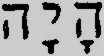
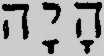
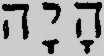
preposition 'to' (
read 'become' (see Gen. 2.
7) or else we should find from the context that 'was' has
some such meaning as 'was potentially'. Neither of these is the
case." In the light of what has
been shown of the facts in this volume, it seems hardly necessary to make any comment on these observations. Another very unfortunate
effort at criticism of this view appeared in the Annual Volume of The
Creation Research Society for 1965. Since this is a Journal
which I have consistently found to be most valuable and which is
always carefully documented, the article seems to me to have been even
more out of character. Here the
theory has very short shrift at
the hands of one author who informs the reader that; "It is true that there
are six instances in the Pentateuch where the verb is
translated 'became' (Gen. 3.22; 19.26; 21.20; Exod.7.19; 8.17and
9.10). In each of these cases, however, the context
clearly shows that a change of state has occurred.... Because Gen. 1.2 lacks contextual support for translating this verb
'became' no English version of Genesis has ever
translated it this way." One continually runs into
this appeal to the absence of "contextual" support. But what is the context of such a passage as this if not the bias of the reader? It is, after all, only the second verse
of the Bible. Can one establish a "context"
in such a situation? As for the statement that
there are only six instances in the Pent- ateuch where the verb
that this was a printer's
error. There are at least seventeen
cases where
Authorized Version (for a
list of these, see page 55). Other
English Versions, such as the
Revised Standard Version, etc., increase this total. So it is
difficult to know how this list of six occurrences was arrived at. In any event, it is apparent that even this
mis- count is based on only a
single translation, and an English one at that. What of other translations whether in
English or any other language? What of the Vulgate with its thirteen
occurrences in Genesis Chapter One alone:
and what of the Septuagint with its twenty- two occurrences in Genesis
One, and with some 1500 in the Old Testament as a whole? It
is sincerely to be hoped that the real facts of the case will in time
become more common knowledge so that statements like this will
not pass unchallenged, even by a Christian editor not trained as a
Hebraist. The same writer proposes
that "became" is only proper for the Hebrew
with any certainty that
verse 2 does not indicate a change ?
This is really the whole point
at issue. I believe there was a change, a breakdown in the
originally created order. The writer's argument has no force whatever, for
it simply begs the issue.... One of the earliest
critics of this view was Professor M. M. Kalisch who had no
sympathy with the ideas held by such scholars as Delitzsch, or Kurtz, or
any other continental scholar of like mind. In his Historical and
Critical Commentary of the Old Test- ament published in 1858, he
says: "It is inadmissible to translate Gen. 1.2 'But afterwards
the earth had become...' " Presumably he had Dathe in mind, for
this was Dathe's rendering. But he states his opinion of those who shared
Dathe's views as to the implications of Gen. 1.2 in no
uncertain terms. He says: "Now most of the modern followers of this opinion believe that an indefinite
interval of time elapsed between the creation of matter recorded in the
first verse and the formation of the world in its present
admirable order, a period sufficiently extensive to account for
the various and repeated changes both in the condition of
the earth and the sidereal systems.
So that the first chapter
does not, in fact, fix the antiquity of the globe at all. But the
supposition is absolutely untenable for the following reason:
verse 2 evidently stands in very close connection with
verse 1 which it qualifies and defines . The connecting particle
'and' (waw) expresses here necess- arily immediate
sequence....; It is utterly impossible to separate the first two
verses and to suppose between them an immense period of
time." His "proof text"
is Exod.20.11. He assumes that this
passage records the whole creative
process as being completed in six days. He thus holds that since
the sun was not "created" till the fourth day, the world as a scene
of living things could not have existed before then. He is, however, overlooking the fact that Exod.20.11 does not say that God created
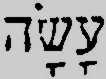
the world in this period of six days, but only that He appointed it (
The verb used here is rendered "make" on numerous occasions of course, but it often
has the sense of "appointing", just as the word is so used in the Greek of
Heb.6.20, "made a High Priest"; or the English phrase "made
a judge", for example. The work of the six days need not have
involved the creation of the sun and stars at all. They were probably already
in existence. See further on Exod. 20.11 in Appendix XX. He is also ignoring the
fact that "and" ( * With this pronouncement
one may contrast Driver's conclusion in his Hebrew Tenses (p. 84);
where after giving a number of instances in
which the usual Hebrew word order is departed from (as it is
in Gen.1.2) in order to express a pluperfect, he says:
"And each of these passages., by avoiding waw consecutive (the
usual way to express contin- uing action, ACC) the
writer cuts
the connection (Driver's emphasis) with the
immediately preceding narrative, and so suggests a
pluperfect". Obviously Driver and
Kalisch can hardly both be right. And in view of the fact that Driver's statement not only occurs
in a scholarly but classic work on the Hebrew verb but is in
this case based on a series of illustrative examples, I
am inclined to accept. Driver's word against the rather
dogmatic statements of Kalisch.
or paragraph or even a chapter or a whole
book with no connection whatever with what went
before. Ezekiel opens with it, for example! With what does it here have
a "necessary" connection?
A new section, in I Chron. 11.1,
is begun after a seven year interval, and in Ezra 7.1 after an
interval of 58 years.... Further illustrations will be found in Appendix
XIV. That the word is often dis-junctive must have been known well
enough to Kalisch, so that one wonders how he can say that it must
necessarily be interpreted conjunctively. Kalisch is fully persuaded that the ideas of people like Delitzsch and Kurtz, who sought to supply
the details of the events in the interval from other parts of
Scripture, are quite worthless in themselves and unbecoming to scholars. He
is quite ungracious in his references to them. On the other hand,
Delitzsch was a man of very different temperament, gracious in
his reference to those who disagreed with him and unhesitatingly
giving credit to their soundness of scholarship (where this was due) even
in his detractors. Delitzsch, as we have seen, held very firm and quite
elaborate views respecting the cir- cumstances surrounding the
condition described in Gen. 1.2 – but he did not base his views on
the linguistic evidence, never actually agreeing that 'became'
would be a more correct translation.
This latter opinion of his is
not infrequently quoted as proof of the un- scholarliness of the
"gap" theory (as it has been by Dr, Henry Morris) but those who refer thus to
Delitzsch's opinion are often not aware that he actually supported
the view strongly, even though he did not base it on Gen. 1.2. Driver was much impressed
by Delitzsch, both as a scholar and as a commentator,* and
while in his Lexicon and in his Hebrew Tenses, Driver rendered Gen. 1.2
as "and the earth was..." when- ever he referred to it, he
nevertheless frankly acknowledged that the view supported by Delitzsch
and Pusey and others, though in his opinion improbably, was
"exegetically admissible".# Like Kalisch, Driver felt that since the
sun had not been "created" until the fourth * Of Delitzsoh, Driver
wrote (Hebrew Tenses, p.xi, xii) "And by sobriety,
fullness of information, and scholarship combined, Delitzsoh has
succeeded in making his commentary indispensible to every
student of the Old Testament." # Driver does not always
follow his own "rules".
Thus although he wrote at length
on both the use of
meaning "became"
and the changed word order as signifying a
day, it was "scientifically
incredible" that a world could have supp- orted the higher forms of
life in a world without sunlight.
This objection is based on a
misunderstanding which again results from confusing the two verbs bara
and 'asah, "to create "and "to appoint". Driver's liberal views were
shared by John Skinner who, while holding that the Bible was
a remarkable enough document of antiquity, felt no qualm sin
challenging its accuracy. Skinner
contributed the volume on Genesis in The
International Critical Commentary of which Driver was one of the
editors. In this volume. Skinner dis- misses our interpretation
with aplomb! Thus he writes: "This view that verse 1 describes an
earlier creation of heaven and earth which was reduced to chaos and
then re-fashioned, needs no refutation". As F. F. Bruce rightly
remarked when referring to this observation in his Paper in The
Transactions of the Victoria Institute, this is "an excessively
cavalier dismissal of a view which has been supported by men of the calibre of
Pusey, Liddon, etc.". It is indeed. The curious thing is that
Skinner virtually concedes the point he is dismissing here when,
later on, he comes to deal with the words tohu wa bohu in his comments on Gen.
1.2. He refers to Jer. 4.23 f. where the words recur, but
he is at pains to assure the reader that there is no real
parallelism here. In a way, I
agree. Jer. 4.23 does not read in the
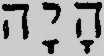
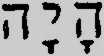
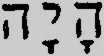
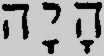
Hebrew, "the earth became tohu wa bohu but "the earth was.....",
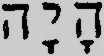
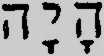
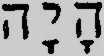
for the verb
situation in Gen. 1.2, its
use is not required since evidently we have a copulative sentence
here. Apparently Skinner did not
observe this fact. However, having said that no light is
thrown upon the words tohu wa bohu
as they appear in Gen. 1.2 by their use in Jer- pluperfect, he did not
always commend his own views by adopt- ing them himself to
translate his own biblical illustrations. It seems that more often
than not he gave the reference which was appropriate but merely
reproduced the Authorized Version rendering as being most
familiar (or accessible) to his read- ers. Thus in dealing with the pluperfect, he
chides Kalisch for rendering Gen. S. 2 as
a pluperfect (p.23), arguing that it is not an example, but
then giving it elsewhere in the same work he renders it as
one (p. 22)! It appears that he has merely reproduced the
Authorized Version in such cases. His rendering of Gen. 1.2
as "was" may really be nothing more than another example of the
Authorized Version being quoted for simplicity.
emiah, he then adds, with
a strange lack of consistency: "Our safest guide is
perhaps Jeremiah's vision of chaos- come-again which is simply that of a
darkened and devastat- ed earth, from which
life and order have fled" (my em- phasis throughout). One wonders how more
precisely he could have supported our view of the implications of
Gen. 1.2. Yet apparently he did not
see the significance of his own
words. In his Hebrew Thought
Compared with Greek, Thorlief Boman writes at length and, to my
mind, most convincingly to the effect that the Hebrew verb
he still holds that it is
copulative in Gen. 1.2, though in a special way. Thus he says that the
verse should not be rendered "the earth became" but "the earth
was...." Now his argument is a
little difficult to summarize briefly but in essence it is thus. In
such a sentence as, "the altar is wood", the verb is is quite
redundant because the altar and the wood are equated. "The one inheres
in the other", as he puts it.
Similarly, in the sentence, "God is
graciousness", the verb is not needed because graciousness inheres in
God. And so on. Yet I am not sure
that he is really right. Not all altars are wood, and certainly
there is plenty of wood that is not
in the form of an altar. Perhaps gracious- ness and God do inhere,
yet sometimes graciousness is found in man too - where it certainly
does not inhere. The trouble
is that the principle can be applied
specifically, but cannot be stated as a gen- eralization. He concludes that the verb
inherence is involved, but it must
be introduced where it is not. Hence he argues that in
Gen. 1.2 the verb is required because other- wise the earth and chaos
are inherent in one another, ie. , the earth is chaos. But then he says
that earth is the scene of human civil- ization, which to the
Greek mind was the definition of Cosmos. And since Chaos and Cosmos
cannot co-exist, the earth cannot inherently be identified with Chaos -
for it is identified with Cosmos. Of course, in the New
Testament the word for Cosmos is rendered "world" for this
reason, because the earth is the habitation of man. Thus he says, because Chaos
cannot inhere in the word "earth", we must introduce the appropriate
form of the verb "Here tohu va bohu
(chaos) does not inhere in 'the earth' for the latter is always the
region of civilization and humanity,
which excludes the
possibility on conceptual grounds. The predicate could not be
equated in this sentence directly with the subject for that would
result in the impossible meaning that chaos and cosmos are
identical concepts." But there is no need to
say that the earth was both Chaos and Cosmos at once. It is
quite sufficient to take the text to mean that what was created a Cosmos
had now become a Chaos. It is hard to see why Boman objected to
this so strongly. The text is then "satisfied" both
conceptually and linguistically.
Indeed, how else than by adopting the
wording that exists could the Hebrew writer have expressed such a
thought? By Boman's own reasoning,
had the writer wished to say
simply that the earth was a Chaos, he would have omitted the verb. Indeed, this is precisely
what Jer.4.23 does. Jeremiah's vision was a vision of a
moment. He saw the earth as a
Chaos. More than this, he saw a Cosmos
as a Chaos, for he actually says that the evidence of civilization
lay in ruins.... , men and cities had been overwhelmed. He was not concerned in reverting to the
past in order to say that this
scene of devastation had come about over a period of time by
such-and-such a process. He merely
says that when he saw it, it
presented to his mind's eye a scene of devastation. It is almost as though the
Author of Scripture had given us this passage in order to assist us in
our understanding of Gen. 1.2 which so nearly parallels it while at the
same time differing from it in such an im- portant detail - the
introduction of demonstrates clearly that
Chaos can be equated with a scene which was once a Cosmos. And
Boman's case, therefore, fails to stand. I think Boman's work is
most valuable, and my criticisms of his reasoning here does not
make his study any less valuable. Yet it suggests that for some odd
reason whenever the subject of Gen. 1.2 comes up for study, normal
vision becomes distorted. Somehow Gen. 1.2 must be
made to mean that when God created the world He began the process with a
Chaos! Those who happen to
disagree are apt to have even their intellect- ual integrity challenged! Thus Professor J. Barr, in his Semantics of Biblical Language, says; "It would be quite
perverse (my emphasis) to insist on the meaning 'become' (in
Gen. 1.2)." His argument is that the
verb
sentence by assuming that
the author meant "the earth was a waste but is no longer so".
Thus it is proper to use the verb only when a situation be ing described
was a temporary situation which has since been changed. Since the
verb is used here, this must be the author's only reason for employing
the verb But I think it very questionable that this is the author's meaning. Yet, as we have already
seen in Chapter II, there are numerous occasions upon which a
clear intention to this effect does not employ the verb. It will be recalled, for instance, that
Job tells his "friends" that
he was (once) a father to the fatherless, sight to the blind, and so
forth.... He is clearly not one of
these things now, at the time of
speaking. If there was a
straightforward rule such as Barr implies, this
would assuredly be the place to apply it, and the verb
often found where in the
nature of the case there can be no "change" intended. Thus very frequently we find the phrase,
"so-and-so was 150 years old and he
died". The author does not mean that he was once such an
age, surely? But the verb is
inserted. The simplest and surely the
most satisfactory explanation is to assume that the man in question
had become so many years old, ie., had reached this age when he
died. If Professor Barr is serious
in making this suggestion, he
should have given a few unambiguous illustrations. But he has not done so. His use of the word "perverse" is
unfortunate. We meet with the same odd
insistence in Raymond F. Surburg's contribution to the
volume, Darwin, Evolution, and Creation. As he puts it; "Although held by many Christians today, this theory can- not be substantiated from
the Bible.... The Hebrew text does not say the earth became,
but the earth was waste and void. Even if it were possible to render Hayetha
as 'be- came', the words 'waste
and void' indicate an unformed state and not one resulting from
destruction. In his Survey of Old Testament Teaching, J. Walsh Watts
asserts 'In Gen. 1.2a the verb is a perfect. It indicates a fixed and com- pleted state. In other
words, original matter was in a state of chaos when created: it
came into being that way'." To say that 'waste and
void' means unformed in the sense of the Greek concept of Chaos might
be reasonable if the Old Testament was a reflection of Greek
mythology. In this case, the
Septuagint
translators would surely
have adopted the Greek word
late Tohu. But they
chose not to do so. It is, however, fairly clear that wherever the words "waste" and "void" occur elsewhere in Scripture they do NOT
indicate an unformed state, they indicate something more positively
undesirable. In many cases, especially when they occur together as
in Jer.4.23, they mean a situation "resulting from
destruction" and brought about by divine judgment. Would it not have been
more accurate to state frankly that elsewhere the normal sense of the
word here interpreted to mean "unformed" would be better rendered de-formed"
or "desolated"? In blanket statements like this, most
readers are at the mercy of the writer unless they are very
familiar with the Old Testament and are aware of how these descriptive
terms are employed in other passages. Bernard Ramm is also
rather cavalier in his treatment of the subject. He describes
efforts to harmonize Geology and the Bible by this method as
"abortive". He then says: "The effort to make was
mean became is just as abortive.. The Hebrew did not have a
word for became but the verb be did service for to
be and become." In point of fact, the
reverse is much more nearly so. They did not need a word for
"to be" in the simple sense, so made their word for become serve
for to be and become.
The modern lexicons bear this out by giving the
meanings of paraphrastic ways), and
then also - and finally - as "to be". "To be" is not its
primary meaning. Ramm continues: "The form of the verb
was in Gen. 1.2 is qal, perfect, third person singular, feminine.
A Hebrew concordance will give all the occurrences of
that form of the verb. A check in the concordance in reference
to the usage of this form of the verb in Genesis reveals that in
almost every case the meaning of the verb is simply was. Again, after what has been set forth of the evidence thus far, comment is hardly
necessary. It may be helpful, however, to recall that in a great number of
cases, 1500 out of 3000 or more, the Sept- uagint substitutes the
Greek "became" (in the appropriate tenses, of course), and that in
another 25% of the cases the verb is used in the sense of living or
existing, and is not copulative at all - and finally, that for every case where the
verb is inserted in the original and
rendered as was (whether correctly or otherwise), one can find
ten cases where the copulative
"was" is omitted entirely in the Hebrew. As we have seen, this is
sufficient indication in itself that the Hebrew did NOT use
actually felt no need for
such a verb at all. Only when the
sense was something other than
the simple "was" did they insert a verbal form. Ramm's treatment of
the subject is, therefore, in the final analysis, unworthy of a
man of his scholarship. His emotional
involvement here is revealed by his next comment: "Granted in a, (my
emphasis) case or two (1) was means became, but if in the preponderance
of instances the word is translated was, any
effort to make one instance mean became especially if that
instance is highly debatable, is very in- secure exegesis." Allowing his premises,
what he argues is perhaps not unreason- able. But his basic premise is surely in
error. One does not need to "make one
instance mean became"; one actually has to do the very reverse if the
evidence presented in this thesis is sound. And I do not know how else
one could approach the problem, nor how one could arrive at any
other conclusion in the light of the facts than that the truth is really
quite the reverse. The Septuagint normally
translated the Greek
important to note, as
Thayer has done, that equated with
equated with both
with
Again, Ramm observes: "This whole matter
was debated in the Journal of The Victoria Institute (London). P. W. Heward
defended the Pember-Scofield-Rimmer
interpretation of Gen. 1.2 and F. F. Bruce defended the
traditional interpretation. To the author, Bruce is easily
(my emphasis) the winner of the debate." Easily - in what sense I wonder? Ramm quoted E. K. Gedney who wrote to twenty Hebrew
scholars in the United States asking them if there were any
exegetical evidences justifying the interpretation of Gen. 1.2 as having
reference to a ruined earth. They
replied unaminously in the
negative. But J. R. Howitt did much the same with respect to the
meaning of the word "day" in Genesis Chapter One. Unaminously the answer was
"a period of 24 hours". Would Ramm accept this as final,
I wonder? So what really is proved by this kind of "appeal to
opinion"? Can one be sure that any
of these men who were questioned were aware
of the background information that is now available on the
matter? They would, however, (as
United States residents)
presumably be reasonably well acquainted with the Fundamentalist position on
the matter. And on this account, human nature being what it is,
they may have simply dismissed the subject as quite unworthy of serious
study. And in the matter of the meaning of the word
"day", Ramm himself says, "The case for the literal day cannot be
conclusive...." So whether
"weight of authority" is "conclusive" or
not depends on one's own particular bias.
Sub- sequently, Ramm observes: "We reject the
literal interpretation (involving days of 24 hours) because by no means
can the history of the earth be dated at 4004
B.C...." Thus in the final analysis
the issue is really being decided for Ramm, not by exegetical
methods at all, but by Geology, the Geology of "majority
opinion". I have been for years reading on both sides of the issue. I have accumulated a substantial
(and very valuable) research library in order to give some "edge" to this reading. I have yet to see a really sound counter-argument to the
view presented in this volume, but I have read innumerable
attacks upon it, and the arguments presented in these attacks are
atrociously repetitious. Few, if
any, of its critics have really taken the
trouble to study the evidence adequately. It is an unfortunate
situation. When Surburg says that the Hebrew text does not say
"the earth became...."but "the earth was....", he is speaking
imprecisely. The Hebrew says
Hebrew is Hebrew, not
English! To say that it says "was" is simply begging the question: he is merely making it say "was". The reasoning is
circular. If I render it
"became", I could as easily prove I was right by
pointing to my own translation! This kind of argument contributes
nothing to our real understanding of the Word of God unless one says why
one is rendering it in this way as opposed to either of the alternatives "became" or "had become". Altogether, I do not find
that any of the objections raised carries weight. They can all be answered either from the statements of other objectors or from
Scripture itself. Certainly the basic objection on linguistic
grounds that the verb "became" is
patently incorrect. But once it has become fashionable to dismiss a piece of
evidence, it usually happens that the dismissal becomes more and more
dogmatic as the writer has less and less factual knowledge of the
evidence. Knowledge usually leads to caution - the hallmark of
scholarship. It is ignorance that
en- courages dogmatism and it
is usually in direct proportion to it. Let us hope that a spirit of
open mindedness will yet prevail to permit a more dispassionate reconsideration
of the matter.
Copyright © 1988 Evelyn White. All rights reserved
|